

The manufacturing landscape of 2026 has become unforgiving. Companies which have delayed digital transformation five years ago now find themselves playing catch-up. Those who bet solely on cost arbitrage are losing ground to competitors embedding intelligence into production systems. While those treating sustainability as compliance rather than competitive advantage are discovering that customers, investors, and regulators no longer accept that distinction.
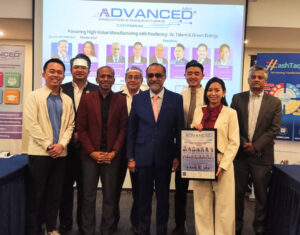
On 18 June 2026, an exceptional gathering of manufacturing leaders convened at Komtar in Penang, Malaysia, for the AIM Asia CXO Forum Penang 2026, a focused dialogue on “Powering High-Value Manufacturing with Resiliency: AI, Talent & Green Energy.” The conversation that unfolded was practical as it was grounded in real deployments, real constraints, and real transformations already underway. What emerged was a collective acknowledgment: the future of manufacturing depends on orchestrating three forces simultaneously, and the window for half-measures has closed.
We would like to extend our sincere appreciation to our Supporting Partner, MDEC.
Special thanks to our Knowledge Partner, Axium Industries, for its valuable contribution. Axium is an enterprise AI company on a mission to bring intelligence and autonomy to the backbone of the global supply-chains. Built for supply-chain-reliant industries across Manufacturing, Energy, Industrials, Retail, and Maritime, they empower C-suite and operational teams to take the non-obvious to outperform.
Besides this, we are also pleased to acknowledge One Systems Technologies, Silver Sponsor of the 3rd Annual AIM Asia Week 2026, for attending the forum and contributing to dialogue discussions.
Furthermore, we would also like to thank our Digital Economy Partner, Digital Penang and Education Partner, Momentus Foundry for their support in making the AIM Asia CXO Forum Penang a successful one.
Our appreciation also goes to our ecosystem partners, including CBASS, SAMENTA, IEEE, IEEE Electronics Packaging Society, Entrepreneur Growth Hub, TusStar Malaysia, Malaysia-China Science-Tech Innovation Alliance, Saichuang Weilai, Malaysia-China Silk Route Business Chamber, HER Entrepreneur, and AIII for their continued support in strengthening the manufacturing and innovation ecosystem across the region.
Together, these partnerships played an important role in fostering collaboration, knowledge exchange, and industry transformation throughout Asia.
Penang Strengthens Its Position as a Manufacturing Innovation Hub

The forum commenced with an opening address by Guest of Honour, YB En Jagdeep Singh Deo, Deputy Chief Minister II, Penang, Malaysia. In his remarks, he reaffirmed Penang’s position as a leading hub for industry, science, and technology, built over more than six decades of industrial development. He highlighted the rapid evolution of the technology landscape, from high-tech manufacturing to deep-tech, artificial intelligence, and emerging future technologies, and emphasised the state’s commitment to supporting industries that embrace innovation and AI-driven transformation.
Addressing one of the region’s most pressing challenges, YB En Jagdeep underscored the growing demand for talent, noting that Penang’s industries are expected to require approximately 60,000 highly skilled technicians and engineers by 2030. He called for closer collaboration between industry, government, and educational institutions to accelerate workforce development, encouraging companies to play a more active role in training and upskilling future talent.
He also highlighted the increasing importance of industry-recognised certifications and alternative learning pathways, noting that future workforce readiness will depend not only on traditional academic qualifications but also on practical, industry-relevant skills validated through recognised certification programmes.
His address reinforced Penang’s ambition to remain at the forefront of advanced manufacturing and technology innovation by strengthening talent development, accelerating AI adoption, and fostering a future-ready industrial ecosystem.

Following the opening address, Renee Tan, Chairperson, Advanced Innovation & Manufacturing (AIM) Asia, shared AIM Asia’s vision in becoming the leading regional platform for industrial transformation, bringing together advanced manufacturers, technology innovators, policymakers, investors, and ecosystem partners across Asia.
In her remarks, Renee outlined AIM Asia’s continued expansion across key innovation and manufacturing hubs, positioning Singapore and Penang as critical nodes for ASEAN cross-border collaboration, innovation acceleration, and regional competitiveness. Through its growing network of industry leaders and stakeholders, AIM Asia aims to strengthen connections between manufacturers, technology providers, investors, and government agencies across the region.
Central to AIM Asia’s mission is advancing manufacturers towards sustainable industry transformation. She noted that the manufacturing sector is facing increasing pressure to accelerate AI adoption, develop future-ready talent, strengthen supply chain resilience, and meet evolving sustainability requirements. AIM Asia provides a platform for industry leaders to exchange insights, share best practices, and collaborate on solutions that address these critical priorities.
Renee concluded by emphasising the importance of building a stronger ecosystem for human capital development, investment, and market access. Through AIM Asia and AIM Circle Platform, organisations gain access to a curated network of industry leaders, investors, technology partners, and potential customers, creating opportunities for sustainable growth and regional expansion while supporting the future transformation of manufacturing across Asia.
Transforming Manufacturing in the New Technology Era: Overcoming AI Disruption, Talent Shortages & Rising Energy Costs
The pressure points are visible across every major manufacturing sector in Southeast Asia. AI disruption is accelerating faster than institutions can respond to it. Semiconductor manufacturers face a technology landscape that changes every few months. Workforce training curricula that takes years to develop are obsolete before graduates enter the workforce. Manufacturing operations that once relied on human intuition and experience are now competing against systems that can optimise production parameters in real time.
Talent shortages have become existential. Malaysia alone faces a gap of technicians and engineers required to meet industry demand, yet traditional education pathways produce a fraction of that number. The problem isn’t just volume; it’s the skills mismatch. While universities are teaching yesterday’s technology, the industry needs tomorrow’s capabilities.
Rising operational costs are squeezing away the margins that historically cushioned inefficiency. Energy consumption has become a strategic lever, not just a cost line item. Scope 1, 2, and 3 emission reporting is no longer optional in supply chains tied to multinational customers. Sustainability isn’t a PR initiative anymore; it directly impacts procurement decisions and customer retention.
Supply chain resilience has become non-negotiable. The pandemic taught manufacturing leaders that geopolitical concentration carries existential risk. Regional diversification isn’t optional; it’s insurance. Against this backdrop, incremental improvement feels insufficient. The leaders who gathered at the AIM Asia CXO Forum Penang 2026 were looking for frameworks to orchestrate fundamental transformation.
The Rise of High-Value Manufacturing in Asia
Penang has emerged as one of Asia’s most critical manufacturing hubs by deliberate ecosystem development over decades. The state hosted operations from Micron Technology, Talentcorp, AMD, Inari Technology, UWC Berhad, Dell Technologies Asia, and Axium Industries all of whom convened at the AIM Asia CXO Forum Penang 2026. It also supports a thriving ecosystem of contract manufacturers, supply chain partners, and service providers. The concentration of technical talent, supporting infrastructure, and government support has created a gravity well for advanced manufacturing investment.
However, Penang’s importance goes beyond existing infrastructure. It represents a model that other regions are studying: how do you build a manufacturing ecosystem that competes on sophistication and resilience, not just cost?
This requires three things:
1. Active government-industry collaboration on shared objectives. The presence of YB En Jagdeep Singh Deo, Deputy Chief Minister II, Penang, underscored the state government’s commitment to manufacturing ecosystem development. The government is actively enabling this through targeted investments in talent development, infrastructure modernisation, and regulatory frameworks that attract and retain advanced manufacturing investment. This is a strategic alignment where government policy directly supports industry capability-building.
2. Anchor tenants willing to invest in ecosystem health. Multinational manufacturers are not just optimising their own operations; they are actively building talent pipelines, funding training programs, and engaging with local universities to raise the technical ceiling.
3. A collaborative mindset among competitors. The willingness of semiconductor industry leaders to share frameworks for Industry 4.0 adoption, talent development strategies, and sustainability approaches, while protecting proprietary information, demonstrates that ecosystem health benefits everyone.
This model has implications beyond Penang. As manufacturing becomes increasingly distributed globally, regional hubs that combine technical sophistication, talent development, and logistical connectivity will capture disproportionate investment and opportunity.
The Convergence of AI, Talent, and Green Energy
The conventional play-book treats these as separate initiatives: launch an AI centre of excellence, partner with a training vendor, install solar panels. The professionals at the AIM Asia CXO Forum Penang made a more nuanced argument: these three forces are deeply interdependent, and treating them in isolation is a recipe for strategic failure.
The AI Challenge: Moving Beyond Pilots
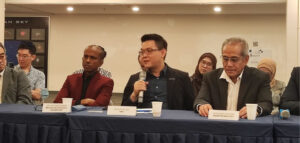
Hoong Fei Lee, Director, IT, AMD, outlined the evolution of AI adoption in manufacturing. The industry started by using AI as an analytical tool, understanding production data, and identifying patterns. It later moved into AI-assisted decision-making: the system recommends; humans decide.
Today, leading organisations are entering the age of autonomous AI agents, systems that run business processes, manage workflows, and execute decisions with minimal human intervention. AMD has deployed “digital employees” (AI agents) that handle routine approvals, coordination across systems, and deliver reports 24/7.
However, this capability brings profound challenges:
– Organisational morale impact when teams see their work automated
– Regulatory and legal exposure as governments move to tax AI-driven productivity gains
– Cybersecurity requirements that demand real-time monitoring of AI decision-making to prevent data poisoning or misuse
– Data governance complexity that renders AI as dependent on data architecture as on algorithms
Most organisations trying to deploy AI at scale hit walls long before they encounter technical limitations. The real constraints are organisational, governance, and data-related.
The Talent Imperative: Rethinking Workforce Strategy
Dr Rnathan Raman, Country Manager, Workforce Development, Micron Technology, Semiconductor Sector, Chairman, Future Skills Talent Council, Electrical & Electronics, Talentcorp addressed the central tension: How do you close a 60,000-person skills gap when traditional education systems can’t scale fast enough? The answer isn’t abandoning universities. Rather, it’s creating parallel pathways:
– Industry-academia collaboration where manufacturers work with universities to embed latest technology into curricula before graduation
– Micro-credential training programs that certify technical skills in 6 months rather than 4 years
– Talent repurposing through reskilling programs that bring experienced professionals (veterans, career returners) into high-demand technical roles
– Inclusive hiring practices that recognise technical capability regardless of traditional credentials or employment gaps

Micron‘s approach with USC University, where final-year semiconductor students complete a 6-month intensive program in the latest packaging technology, demonstrates that closing the gap is possible but requires deliberate, ongoing investment from both industry and academia.
The Sustainability Dimension: From Cost Center to Strategic Asset
Noorazidi Che Azib, Vice President, Operation Technology, Strategic Program and Environment Health and Safety, Inari Technology, highlighted the importance of developing stronger supplier ecosystems to support long-term manufacturing resilience and competitiveness. He shared how Inari’s “Waterfall Effect Model” focuses on transferring capabilities, standards, and best practices throughout the supply chain, creating positive ripple effects that benefit not only large manufacturers but also SMEs and supporting industries.
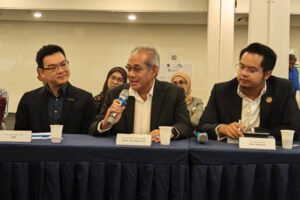
According to Noorazidi, sustainability has become a critical business requirement rather than a compliance exercise. As global customers increasingly demand certified sustainable practices across their supply chains, manufacturers must work closely with suppliers to ensure they can meet evolving environmental, health, safety, and operational standards. At Inari, Environmental, Health & Safety (EHS) requirements are embedded into equipment co-development initiatives with suppliers, helping raise capabilities and technical standards across the ecosystem. This collaborative approach strengthens supply chain resilience, improves supplier readiness, and enables smaller companies to participate more effectively in high-value manufacturing opportunities. He emphasised that more large manufacturers should take an active role in developing their supply ecosystem, as the success of the industry depends not only on individual company performance but on the collective strength and competitiveness of the entire value chain.
Humanising AI in the Future Workplace
Andy M, Regional Director, Dell Technologies Asia, highlighted that successful AI transformation requires more than upgrading technology systems. Organisations must also modernise workflows, operating models, and workplace culture to reap the benefits of AI fully. He emphasised that the future of work will be shaped by the combination of human capabilities and AI assistance, enabling employees to focus on higher-value activities while improving productivity and decision-making.

As AI adoption accelerates, organisations must ensure that technology remains human-centred and supports workforce development. Andy also noted that businesses may need to rethink traditional investment models, balancing investments in talent and workforce development with increasing expenditure on AI tools, digital infrastructure, and AI utilisation. His insights reinforced the importance of aligning people, processes, and technology to build resilient and future-ready organisations.
Building the Data Foundation for Agentic AI
Tobias Leong, Chief Technology Officer, Axium Industries, shared practical insights on where agentic AI is delivering real value in manufacturing and supply chain operations today. Drawing from his experience working with industrial businesses across Asia, he highlighted that while many organisations are eager to adopt AI, the success of these initiatives depends heavily on the quality, structure, and accessibility of their data.
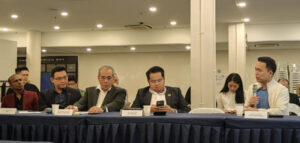
Before implementing advanced AI systems, companies must first establish strong data foundations and ensure data integrity across the organisation. Tobias emphasised that siloed AI initiatives often deliver limited value. Without unified and connected data across departments, AI cannot generate meaningful insights, support better decision-making, or drive significant workflow improvements. As a result, much of the work involved in successful AI transformation focuses on addressing data challenges, improving visibility, and creating a connected information ecosystem. His insights reinforced a key message from the forum: organisations seeking to unlock the full potential of AI must prioritise data readiness, governance, and cross-functional integration as part of their digital transformation journey.
From Experimentation to Enterprise Adoption: The Real Challenges of AI Implementation
During the discussion, Dr. Matin Ng, Deputy Group CEO, UWC Berhad, offered a pragmatic perspective on the realities of implementing AI within manufacturing organisations. While AI presents significant opportunities to enhance productivity and operational efficiency, he noted that there is currently no universal blueprint for successful implementation. Organisations are still navigating a process of experimentation, learning, and continuous refinement as they identify the most suitable applications for their business needs. At UWC Berhad, various departments have been actively exploring AI solutions to improve productivity and streamline workflows.
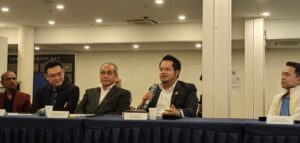
However, one of the key challenges observed across many organisations is that AI initiatives are often developed in isolation, with individual departments adopting tools independently without a broader enterprise-wide strategy. As a result, many AI projects remain confined within departmental silos, limiting their ability to generate organisation-wide value. Dr. Matin emphasised that while individual AI applications can deliver productivity gains, greater impact can be achieved when AI initiatives are integrated across functions and supported by a unified organisational approach.
Why Penang Matters in the Future of Manufacturing
Penang’s emergence as a high-value manufacturing hub reflects a deliberate strategy: compete on sophistication and resilience, not cost. This has several implications:
For investment: Manufacturers and investors looking for stable, skilled, growing ecosystems in Southeast Asia will continue funnelling resources to established hubs with infrastructure and talent density.
For workforce strategy: Penang’s success in workforce development, supported by TalentCorp’s Future Skills Talent Council and industry partnerships, is becoming a model. Other states and nations are studying how to replicate the talent pipeline. Companies targeting Southeast Asia for expansion are increasingly considering Penang not just for facilities, but for access to technically sophisticated talent.
For regional geopolitics: The concentration of semiconductor manufacturing in Southeast Asia, across Malaysia, Singapore, Thailand, and Vietnam, is becoming strategically significant. The diversification away from Taiwan and China creates new dependencies and opportunities. Regional collaboration on standards, talent development, and supply chain resilience is increasingly important.
For sustainability: Penang’s commitment to embedding EHS and green energy practices into manufacturing operations is setting standards for the broader ecosystem. As multinational customers tighten sustainability requirements, manufacturers operating to Penang’s standard find themselves ahead of compliance curves.
Key take-aways from Manufacturing Leaders at AIM CXO Forum Penang 2026
The forum brought together professionals who are actively navigating these challenges:
– Dr Rnathan Raman, Country Manager, Workforce Development, Micron Technology, Semiconductor Sector and Chairman, Future Skills Talent Council, Electrical & Electronics, Talentcorp, shared frameworks for closing the workforce skills gap through industry-academia partnerships and reskilling initiatives, directly addressing the 60,000-person deficit in Malaysia’s technical workforce.
– Hoong Fei Lee, Director, IT, AMD, outlined the evolution of AI adoption in manufacturing, the governance challenges of autonomous AI systems, and strategies for energy-efficient AI deployment without sacrificing capability.
– Noorazidi Che Azib, Vice President, Operation Technology, Strategic Program and Environment Health and Safety, Inari Technology, discussed how operational technology, Industry 4.0 implementation, and EHS integration are creating resilient, sustainable operations while maintaining competitive advantage.
– Dr. Matin Ng, Deputy Group CEO, UWC Berhad, highlighted a critical paradox: while AI implementations often deliver departmental productivity gains, most organisations fail to break down silos, leaving isolated projects unable to create enterprise-wide value.The real challenge is moving from experimental, fragmented AI adoption to a unified, integrated strategy that harnesses AI’s transformative potential across the entire organisation.
– Andy M, Regional Director, Dell Technologies Asia, shared workforce transformation frameworks, particularly how organisations are restructuring for speed, embedding AI into workflows, and managing the human dimension of technological change.
– Tobias Leong, Chief Technology Officer, Axium Industries, presented cutting-edge applications of agentic AI systems for supply chain optimisation, demonstrating how AI can solve problems humans can’t solve at required speed.
– The moderation by Renee Tan, Chairperson, Advanced Innovation & Manufacturing Asia, ensured the conversation stayed grounded in operational reality rather than theoretical possibility.
Continue the Conversation with AIM Asia
While AIM Asia CXO Forum Penang 2026 has concluded, the conversations around AI, talent transformation, sustainability, and manufacturing resilience are only just beginning. At Advanced Innovation & Manufacturing (AIM) Asia, our mission is to accelerate sustainable industry transformation by bringing together manufacturers, innovators, government leaders, investors, and ecosystem partners who are shaping the future of manufacturing across the region.
Through AIM Circle, our omni-channel community platform, members gain access to ongoing industry insights, expert-led discussions, networking opportunities, and the latest developments in AI, innovation, sustainability, and cross-border manufacturing value chains.

Why Join AIM Circle?
✔ Stay updated on emerging industry trends and opportunities
✔ Learn from industry leaders and subject matter experts
✔ Participate in mastermind discussions and knowledge-sharing sessions
✔ Connect with peers, innovators, and decision-makers across Asia
✔ Build meaningful relationships that support business growth and transformation
Join AIM Circle and become part of a growing community driving the future of advanced manufacturing: https://aim-asias-community.circle.so/aim-asia-circle
Looking Ahead: 3rd Annual of Advanced Innovation & Manufacturing (AIM) Asia Week 2026 Penang
Join us at the 3rd Annual Advanced Innovation & Manufacturing (AIM) Asia Week 2026, taking place on 29–30 September 2026 in Penang, Malaysia, where industry leaders, manufacturers, policymakers, investors, and technology innovators will come together to explore: “Sustainable Future Manufacturing Transformation: Human Capital, AI & Innovation”.
Expect two days of strategic discussions, industry insights, networking opportunities, technology showcases, and cross-border collaboration focused on shaping the future of manufacturing in Asia.
Early Bird registration ends in July 2026.
Register today: https://AIMAsiaWeek2026.eventbrite.sg
Secure your place and be part of Asia’s leading platform for advanced manufacturing innovation and industry transformation.
Learn more: https://advancedmanufacturingasia.com
We would like to extend our sincere appreciation to the partners of the 3rd Annual AIM Asia Week 2026 and contributing to the advancement of the region’s manufacturing and innovation ecosystem. The 3rd Annual AIM Asia Week 2026 is proudly endorsed by MATRADE, with Digital Penang serving as our Digital Economy Partner.
We are grateful for the support of the Penang State Government, Penang State EXCO Office for Tourism and Creative Economy (PETACE), Penang Convention & Exhibition Bureau (PCEB), Visit Malaysia 2026, Penang 2030, LovePenang, and MDEC for their commitment to strengthening Penang’s position as a leading hub for innovation and advanced manufacturing.
Special Thanks to our Silver Sponsor OneSystems Technologies and to our exhibitors, Meister, Open DC, and ManageEngine, for showcasing technologies and solutions that are enabling the next generation of industrial transformation.
Our heartfelt appreciation also goes to our ecosystem partners, including IEEE, IEEE Electronics Packaging Society, Singapore Chamber of Commerce Malaysia, SAMENTA, CBASS, Entrepreneur Growth Hub, PDX, HER Entrepreneur, AIII, HASH Innovation, CXO4Good, TusStar Malaysia, Malaysia-China Science-Tech Innovation Alliance, Saichuang Weilai, Malaysia-China Silk Route Business Chamber, Vietcham, and many others.
Finally, special thanks to HASHTAQS, organiser of the 3rd Annual of AIM Asia Week 2026 and the AIM Asia CXO Forum Penang 2026, for bringing together manufacturers, technology innovators, government leaders, investors, academia, and ecosystem stakeholders to foster meaningful collaboration and accelerate sustainable industrial transformation across Asia.
Want to be involved in AIM Asia initiatives or to be featured in our articles? Contact us now!
Contact [email protected] or +65 8868 1418 (SG) | +6011 1616 3281 (MY)