
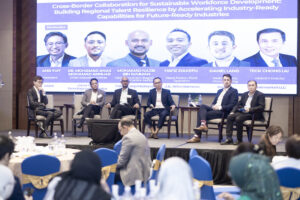
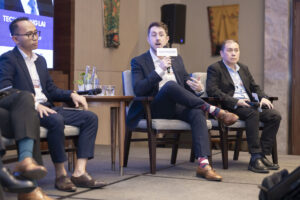
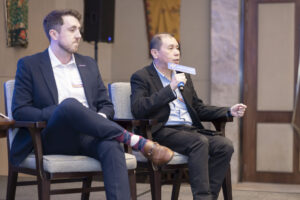
As ASEAN accelerates its position as a global manufacturing powerhouse, one critical question is reshaping boardroom discussions: How can companies scale production without scaling workforce complexity? At the Advanced Innovation & Manufacturing (AIM) Asia Summit 2026, this pivotal issue took centre stage in a high-impact panel discussion on Cross-Border Collaboration for Sustainable Workforce Development. Bringing together leaders from multinational manufacturing and technology companies, the session unpacked how AI, automation, and workforce transformation are redefining the future of manufacturing across Southeast Asia. Rather than focusing purely on technology adoption, the conversation went deeper into the human, operational, and strategic realities of scaling industrial growth in a rapidly evolving landscape.
ASEAN as the Next Global Manufacturing Growth Engine
With global supply chains shifting beyond China, ASEAN is rapidly emerging as a preferred destination for expansion. Countries like Malaysia, Vietnam, and India are seeing increased investment as manufacturers scale output from hundreds of millions to billions of units annually.
However, this growth presents a structural challenge: traditional labour models are no longer sufficient to support modern manufacturing demands. Panellists highlighted that scaling today is not about hiring more people, it is about building smarter, more adaptive, and highly skilled workforces powered by AI and automation.
From Labour-Intensive to Intelligence-Driven Manufacturing
One of the most important shifts discussed was the transition from manual, repetitive roles to intelligence-driven operations. Manufacturers are increasingly deploying AI and automation not to replace workers, but to augment their capabilities. This enables companies to:
– Scale production without proportional headcount growth
– Improve consistency and quality across global operations
– Reduce dependency on highly specialised labour
– Increase operational agility in volatile market conditions
This shift marks a move towards Industry 5.0, where human expertise and machine intelligence work in tandem.
Building the “Generalist” Workforce for Scale.
A recurring theme across the discussion was the rise of the “generalist operator”. Instead of relying on highly specialised roles, companies are standardising processes and leveraging AI to enable workers to perform across multiple functions. This approach allows organisations to:
– Accelerate workforce deployment across new facilities
– Maintain flexibility in operations
– Reduce training complexity
– Support rapid production scaling
By embedding standard work practices and digital tools, companies can replicate performance across regions while maintaining global benchmarks.
Standardisation as the Foundation of Global Consistency
For multinational manufacturers, one of the biggest challenges is ensuring consistency across geographically dispersed operations. The panel highlighted how companies are implementing rigorous standard work frameworks and Total Productive Maintenance (TPM) to maintain operational excellence. These systems ensure that:
– Processes are repeatable and measurable
– Performance is aligned across all sites
– Local teams can operate autonomously while meeting global standards
A strong example shared was the ability to run fully localised workforces while maintaining global manufacturing quality, demonstrating that localisation and standardisation are not mutually exclusive.
Elevating the Role of the Operator
The role of the shop-floor operator is undergoing a fundamental transformation. No longer limited to machine operation, today’s workforce is expected to:
– Interpret data and identify inefficiencies
– Understand process logic behind automation systems
– Contribute to continuous improvement initiatives
– Take ownership of quality and performance outcomes
This evolution requires a shift in mindset, from task execution to decision-making capability.
As highlighted during the session, future-ready operators are not just workers; they are problem-solvers empowered by data.
Creating a Culture That Enables Transformation
Technology alone is not enough. Successful transformation depends heavily on organisational culture and leadership. One of the most powerful insights from the panel was the importance of creating a “safe space to fail.” For companies to fully leverage automation and AI, employees must feel confident to:
– Experiment with new systems
– Learn from mistakes
– Adapt to changing processes
– Challenge existing workflows
Without this psychological safety, digital transformation initiatives risk stagnation.
Redefining Job Security in the Age of AI
A critical misconception addressed during the discussion was the fear that automation leads to job loss. In reality, the panel emphasised that automation is redefining, not eliminating jobs. Organisations that embrace this shift are seeing:
– Higher-value roles emerging within operations
– Improved career pathways for workers
– Greater talent retention and engagement
– Stronger employer branding in competitive talent markets
The narrative is clear: AI does not replace humans, it elevates them.
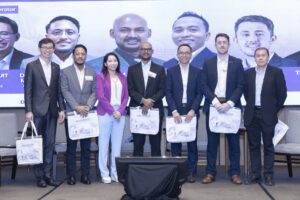
Hear from the Panelists:
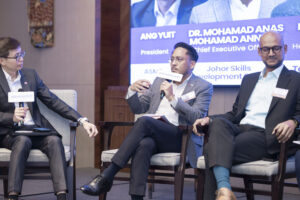
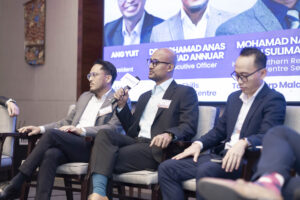
– Dr. Mohamad Anas Mohamad Annuar, Chief Executive Officer, Johor Skills Development Centre
– Mohamad Nazib Bin Suliman, Head Southern Region & Data Centre Sector, TalentCorp Malaysia
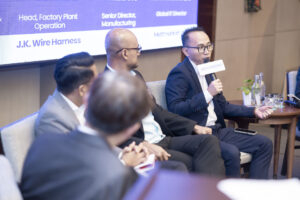
– Hafiz Zulkepli, Head, Factory Plant Operation, J.K. Wire Harness
– Daniel Lang, Senior Director Manufacturing, Insulet
– Teck Chong Lai, Global IT Director, Matmarket LLC
Moderated by Ang Yuit, President, ASME
The Future of Manufacturing Workforce in ASEAN
As ASEAN continues its upward trajectory, the future of manufacturing will be defined by three critical factors:
1. AI-enabled workforce transformation
2. Standardised yet flexible operational models
3. Strong alignment between talent, technology, and strategy
Companies that succeed will be those that invest not just in automation, but in people, equipping them with the skills, mindset, and tools to thrive in a new industrial era.
Be Part of the Conversation
If you are a manufacturer, policymaker, investor, or innovator looking to scale in Southeast Asia, this discussion offers a strategic lens into how workforce transformation is shaping the region’s competitive edge. Stay connected with AIM Asia as we continue to drive conversations at the intersection of Innovation, Investment, and Impact.
Contact us at [email protected] or +65 8868 1418 to explore speaking, sponsorship, exhibition, and partnership opportunities.
Connect with AIM Asia. Shape the future of industry.